Baptism of the Lord
The Baptism of Our Lord - Year A 2026
Today’s feast is not simply the conclusion of the Christmas season. It is the moment when identity turns into mission. What has been revealed quietly at Bethlehem now begins to move outward into the world.
The Church places this feast here very deliberately. Before Jesus teaches publicly, before he heals, before he gathers disciples, something essential is established. And what we are invited to recognize today is that this same pattern shapes every baptized life.
Jesus enters the waters of the Jordan not because he needs repentance or cleansing. He enters them in obedience, humility, and love. In doing so, he embraces the mission described by the prophet Isaiah: the Servant upheld by God, anointed by the Spirit, sent to bring justice, healing, and light. His baptism is not an ending. It is a beginning.
And that is why today’s feast is not only about Jesus. It is also about us.
We often hear the Church speak about going out and baptizing, about mission and evangelization. But it’s worth pausing to ask what that really means for most of us. Very few people here today will ever stand at a baptismal font and pour water over someone’s head. That responsibility usually belongs to clergy, and sometimes to lay people in extraordinary circumstances. So if we are not literally baptizing people, how are we meant to live this mission?
The answer is not found primarily in our arguments, our strategies, or our abilities. It is found in the way we live.
Baptism is not only about what happens at the font. Baptism is about what happens after the font. It is not only about being washed. It is about being sent.
At our baptism, something very real took place. The same Spirit who descended upon Jesus was given to us. Not symbolically. Not metaphorically. Truly. We were claimed as beloved sons and daughters. We were united to Christ. We were entrusted with a share in his mission.
But the Church has always been clear about something important: God does not force relationship. He does not compel love. He does not override our freedom. Grace is given fully, but it must be received and cooperated with.
The Spirit is never absent from the baptized. But the Spirit can be resisted. Ignored. Crowded out. We can live in such a way that the gift we have received bears very little fruit. Not because God has withdrawn, but because love cannot be imposed.
God does not treat us as puppets. He treats us as sons and daughters. And sons and daughters must choose relationship.
If we rely only on our own strength, our own plans, our own competence, we may be busy, even well intentioned, but we will not be fruitful in the way God desires. The mission of baptism is not accomplished by self-reliance. It is accomplished when we allow the Spirit dwelling within us to lead us.
This is why the anointing at baptism matters.
When we were baptized, the Church anointed us with Sacred Chrism. That anointing is not decorative. It marks us as participants in the mission of Christ himself. In baptism, we share in his identity as priest, prophet, and king. Not in the same way as the ordained ministry, but truly and really, according to our vocation as the baptized.
To be priestly is to offer our lives in love. To be prophetic is to witness to truth, often without many words. To be kingly is not to dominate, but to serve, beginning with the mastery of our own hearts. This is the mission that baptism sets in motion.
And this helps us understand something important: we do not bring people to the waters of baptism by dragging them there. We bring them by living in such a way that they recognize where the water is.
When someone lives with patience instead of bitterness, mercy instead of resentment, fidelity instead of self-interest, hope instead of despair, something happens. People may not be able to explain it, but they sense life. They sense depth. They sense truth. And slowly, often quietly, they are drawn toward the source of that life.
It is not us who draw them. It is the Spirit dwelling in us.
This is why the Church prays today that we might be “well pleasing” to God. Not in the sense of moral performance or perfection, but in the sense of communion. Jesus is pleasing to the Father because he lives in complete union with the Father’s will. Our task is not to be flawless, but to remain in relationship.
To walk hand in hand with Christ.
To allow the Spirit given to us in baptism to shape our choices, our priorities, our loves, and our service.
As we begin Ordinary Time, the Church is not inviting us into something ordinary at all. She is inviting us into the daily, steady living out of our baptism. Into a life where the Spirit is not merely acknowledged, but welcomed. Not merely remembered, but followed.
The same Father who grasped his Servant by the hand has grasped us as well. The same Spirit who descended upon Christ has been poured into our hearts. And the same mission entrusted to the Son has been entrusted, in a real way, to us.
May this feast renew in us not only the memory of our baptism, but the desire to live it. And may our lives, shaped by the Spirit, quietly and faithfully lead others to the living water, where they too may discover that they are beloved.

Epiphany
Solemnity of the Epiphany of the Lord - Year A 2026
Today the Church proclaims Epiphany, the manifestation of Christ to the nations. But this feast is not simply about something being revealed. It is about how people respond when that revelation appears.
Light has come into the world.
A star rises in the sky.
A child is born.
And immediately, the world divides.
We heard from the prophet Isaiah, “Rise up in splendor, Jerusalem. Your light has come.” Nations are drawn toward that light. Kings approach with gifts. Gold and frankincense are carried from afar. The vision is expansive, hopeful, and global. God’s light is not meant to remain contained. It draws, gathers, and unites.
But Matthew’s Gospel shows us something more complex. The same light that attracts the magi unsettles Herod. The same revelation that leads some to worship leads others to fear. We are told that Herod was greatly troubled, and all Jerusalem with him.
That line matters. This is not just the anxiety of one insecure ruler. It is a corporate resistance to the light.
Herod represents one kind of kingship. It is a kingship built on control, preservation of power, and fear of loss. When he hears of a newborn king, he does not ask how to adore. He asks how to protect himself. His reign cannot make room for another.
The magi, on the other hand, recognize a very different kind of kingship. They come from outside the boundaries of Israel. They are not part of the covenant people. And yet they see what others miss. They follow the light. They journey. They kneel. They offer gifts. And when they leave, they go home by another way.
Epiphany always asks us this question:
Which response is ours?
Saint Paul names what is really at stake. In his letter to the Ephesians, he says that the Gentiles are now coheirs, members of the same body, copartners in the promise of Christ. This is not a poetic idea. It is a radical claim. Through Christ, distinctions that once separated people are shattered. There is now one Body. One inheritance. One King.
And this is where your intuition lands with great force. We are heirs, not to an earthly kingdom that must defend itself, but to the Body of Christ, which is eternal. Herod’s kingdom ends in violence and decay. Christ’s kingship gives life, draws the nations, and makes us sons and daughters of God.
This is not abstract theology. The liturgy itself makes this visible. In just a few moments, we will bring our gifts forward. But the prayer over those gifts reminds us that we no longer offer gold or frankincense or myrrh. We offer Christ himself, who is proclaimed, sacrificed, and received. And in receiving him, we ourselves are transformed.
Epiphany, then, is not only about Christ being revealed to the nations. It is about the nations being drawn into Christ. The light that shines from the child in Bethlehem now implicates us. A new star has risen on our horizon, and it asks something of us.
Are we willing to follow the light when it leads us beyond what is familiar?
Are we willing to loosen our grip on the small kingdoms we try to protect?
Are we willing to let Christ redefine what power, success, and inheritance really mean?
The magi teach us that encounter with Christ always changes our direction. They do not return the same way they came. Neither can we.
If we truly believe what we will soon proclaim in the Preface, that we have been made new by the glory of Christ’s immortal nature, then our lives must begin to bear that light into the world. Not in grand gestures, but in concrete witness. In acts of mercy. In hospitality. In unity. In choosing the way of Christ’s kingship rather than Herod’s.
Epiphany is the feast where contemplation gives way to action. The light has appeared. The question now is whether we will follow it.

Holy Mary, Mother of God
Solemnity of Mary, the Holy Mother of God - 2026
On this Octave day of Christmas, the Church places before us a mystery that is both astonishing and deeply familiar. God takes on flesh. Not in abstraction, not in power or spectacle, but through the flesh of a woman. God chooses to come to us through a mother.
We often speak about the Incarnation in grand theological terms, and rightly so. But today the Church draws us close to something very human. God does not merely visit humanity. He enters it. He dwells among us. He submits himself to time, to growth, to dependence, to vulnerability. He is carried, born, named, and held.
Saint Paul names this mystery with striking simplicity. God sent his Son, born of a woman, born under the law. Not born above the law. Not born outside of it. Born into the very structures, limits, and expectations that shape human life. God enters our condition from the inside.
That entrance happens through Mary’s yes. But her yes is not a slogan or a spiritual achievement. It is an act of trust in the face of mystery. Mary does not receive a plan. She receives a promise. She does not know how things will unfold. She only knows whom she is trusting.
The Gospel today gives us a quiet scene. The shepherds come and go. The child is circumcised. He is given the name Jesus, the name spoken by the angel before he was conceived. And Mary does what she will do again and again. She reflects on these things in her heart.
That detail matters. Mary does not fully understand what is happening. She holds it. She carries it. She allows the mystery to dwell within her, just as she once allowed God himself to dwell within her body.
This is not passive faith. It is courageous faith. It is faith that does not demand clarity before obedience. Faith that does not insist on control before trust.
The first reading from Numbers speaks of blessing. The Lord bless you and keep you. The Lord let his face shine upon you. In the ancient world, a name was not just a label. It signified presence and relationship. To know the name of God was to be drawn into covenant, not ownership. God allows his name to be spoken over his people as a promise of nearness.
That promise reaches its fulfillment in Jesus. God no longer merely allows his name to be invoked. He gives us his Son. He places his own life into human hands. The blessing becomes flesh.
And Mary stands at the center of that moment. The blessing passes through her. God entrusts himself to her care. The eternal Word becomes a child who must be fed, protected, soothed, and taught.
There is something disarming about that. God does not save us by remaining distant. He saves us by becoming close. Close enough to be wounded. Close enough to be rejected. Close enough to be loved.
The Preface we will pray in a few moments speaks of the Holy Spirit overshadowing Mary. That word carries weight. Overshadowing is not light or decorative. It implies burden, responsibility, and risk. Mary’s motherhood will not be easy. The joy of Christmas already carries within it the shadow of the cross.
And still she says yes.
For many of us, this resonates more deeply than we might expect. Most people in this church know something about living with unanswered questions. About responsibilities we did not fully anticipate. About paths that unfolded differently than planned. About trusting God without seeing clearly where that trust would lead.
Mary does not escape the human condition. She enters it more deeply. And in doing so, she becomes mother not only of Christ, but of all who will belong to him.
Saint Paul tells us that because the Son entered our humanity, we now receive the Spirit of adoption. We are no longer slaves, but children. We cry out Abba, Father. That cry is not the speech of a servant fulfilling a duty. It is the voice of a child discovering that they belong.
Mary makes that possible, not by replacing Christ, but by bringing him into the world. She shows us what it means to receive God not as an idea, but as a person. Not as a concept to master, but as a presence to welcome.
As we begin a new year, the Church does not give us resolutions. She gives us a mother. She invites us to begin again where God began, with trust, with openness, with a willingness to let God act in ways we do not control.
The faithful who gather today know that following Christ is not convenient. It asks something of us. But today reminds us that God does not ask before he gives. He gives himself first.
As we come to the altar, we stand where the shepherds once stood. We glorify and praise God for what we have heard and seen. We receive again the Body of Christ, born of a woman, given for our salvation.
May we learn from Mary how to hold the mysteries of God in our hearts. How to trust even when understanding comes slowly. How to say yes not because everything is clear, but because God is faithful.
And may this Eucharist renew in us the grace of adoption, so that with confidence and gratitude, we may call upon God by name and live as his beloved children.

The Holy Family
Feast of the Holy Family of Jesus, Mary, and Joseph - Year A 2025
Family life is one of the places where we most deeply long for stability, and yet it is often the place where life feels most unpredictable. It is where love and strain exist side by side. Where joy and worry are often inseparable. Especially in the days following Christmas, many families feel this tension more clearly. Expectations are high, emotions are close to the surface, and the realities of life do not always match the picture we hoped for.
The Church does not place the Holy Family before us today as an escape from that reality. It does not offer us an image of a quiet, settled household untouched by fear or difficulty. Instead, the Gospel places us in the middle of disruption. A child’s life is threatened. A family is forced to flee in the night. They become refugees, strangers in a foreign land, and must continue to trust God while everything familiar is taken from them.
This matters, because it tells us something essential about holiness. The holiness of the Holy Family is not found in comfort or predictability. It is found in fidelity. Not in having a perfect plan, but in remaining faithful when the plan changes.
Joseph stands at the center of this quiet faithfulness. He chooses, again and again. But he does not choose according to a plan he had made for himself. His life unfolds in ways he never anticipated. And yet, each time God asks something of him, he responds with trust. He protects the child. He provides for his family. He moves when told to move, and he settles where he is led. His obedience is not dramatic. It is steady. It is costly. And it is deeply loving.
Many people recognize themselves in the circumstances Joseph faced. They are living a life they did not fully imagine. Responsibilities came earlier or heavier than expected. Relationships changed. Health declined. Roles shifted. And often, what follows is not immediate faithfulness, but frustration, grief, or even resentment. The faithfulness we see in the Holy Family is not something we can assume in ourselves. It is something that draws us forward, inviting us toward a love we are still learning to live.
One of the places where this struggle between resentment and faithfulness is lived most intensely is within the family itself, especially as roles change and dependence grows. The first reading from Sirach speaks directly into this lived reality. It calls us to honor our parents, especially as they age and become vulnerable. This kind of honoring carries real weight. It may require patience when understanding fades. Presence when conversation becomes difficult. Fidelity when gratitude is no longer expressed in familiar ways.
This is not an easy calling. It can be exhausting and hidden. But Scripture assures us that God sees this faithfulness. That love offered in these quiet, demanding moments is not wasted. That honoring those who once cared for us participates in God’s own mercy and care.
Saint Paul names the virtues that make this kind of life possible. Compassion, kindness, humility, gentleness, and patience. These are not abstract ideals. They are learned in ordinary places. In family rooms and hospital beds. In strained conversations and long silences. They are practiced slowly, often imperfectly, and almost always through perseverance.
Paul also reminds us that love binds everything together and makes it complete. Not love as a feeling, but love as a decision. Love that remains when circumstances are difficult. Love that chooses relationship over withdrawal.
This is why the prayers of today describe the Holy Family as a shining example. Not because their life was easy, but because their love endured. They trusted God not by understanding everything, but by remaining faithful in the midst of uncertainty. Their family life was shaped by trust, obedience, and a willingness to remain open to God’s leading.
And this vision of family does not stop at the walls of our homes. Paul reminds us that these same virtues are meant to shape the entire Christian community. We are members of one body. We belong to one another. The faithfulness learned in family life is meant to extend outward into the life of the Church and, ultimately, into the human family God desires to gather into his house.
All of this leads us naturally to the altar.
Because the Eucharist is where this kind of love is formed and sustained. Here, Christ gives himself completely, quietly, and faithfully. Here, we receive the strength not to escape the demands of love, but to live them more fully. The Eucharist does not remove the difficulties of family life. It gives us the grace to remain present within them.
The prayers of this feast speak of a dwelling place, of sharing one day in the joy of God’s house. That promise begins now. It begins every time patience overcomes frustration. Every time love is chosen over resentment. Every time someone remains faithful when it would be easier to turn away.
The Holy Family shows us that holiness is not found in having everything resolved. It is found in trusting God enough to keep going. To keep loving. To keep choosing fidelity when the path ahead is unclear.
As we come forward today to receive the Body and Blood of Christ, we ask for the grace to let his perfect love shape our imperfect lives, so that we may love not perfectly, but faithfully. That in our families, and in this family of faith, we may grow slowly into the joy of God’s house, where no act of love is ever lost, and where every faithful choice is gathered into God’s eternal life.
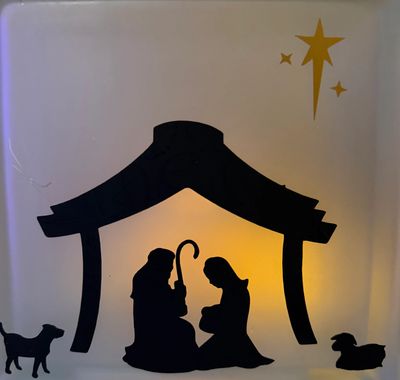
The Nativity of our Lord
Nativity of the Lord, Mass During the Night - Year A 2025
There is something about night that reveals what we usually keep hidden.
At night, the noise quiets. The distractions fade. We are left more alone with our thoughts, our fears, our hopes. Night has a way of exposing both the tenderness and the hardness of the human heart.
That is not accidental. Tonight, God chooses the night.
We heard it in the first reading. A people who walked in darkness have seen a great light. Not a people who had everything together. Not a people who were morally perfect or spiritually strong. A people walking in darkness. People weighed down. People burdened. People living under pressure, fear, and forces beyond their control.
That description still fits us.
When our humanity is lived apart from relationship with God, it hardens. Not always in obvious ways. Sometimes it hardens quietly. We become guarded. Defensive. Suspicious. We learn to rely only on ourselves. We manage life rather than receive it. We cope instead of hope.
And when that happens, even good things can begin to feel heavy. Responsibilities feel burdensome. Relationships become transactional. Joy feels fragile. We may still function, but something within us grows tired, closed, or numb.
The Gospel shows us that world clearly. An empire counting people, measuring them, organizing them, exerting control. A young couple displaced, traveling under orders they did not choose. No room at the inn. No welcome space. A child born not into comfort, but into vulnerability.
This is not a sentimental scene. It is a deeply human one.
And this is precisely where God enters.
God does not wait for humanity to soften itself. He does not wait for us to become more receptive, more faithful, more deserving. He enters our humanity as it is. He shares it. He takes it on from the inside.
The sign given to the shepherds is not power, not dominance, not control. It is a child wrapped in swaddling clothes and laid in a manger. God does not overpower our hardness. He meets it with presence.
That is the great reversal of Christmas.
So often we think the solution to our struggles is effort. If I just try harder. If I get my life more organized. If I fix what is broken on my own. But the message of this night is different. Healing begins with relationship, not performance.
Paul says it plainly in the letter to Titus. God’s grace has appeared. Grace, not law. Grace, not achievement. Grace that trains us, reshapes us, frees us from lawlessness, not by crushing us, but by restoring us.
That word matters. Lawlessness is not simply breaking rules. It is living without reference. Without relationship. Without grounding our humanity in the One who created it.
And if we are honest, we move in and out of that place all the time.
None of us live in perfect, uninterrupted relationship with God. We drift. We return. We grow close. We pull away. Sometimes intentionally. Sometimes without even noticing.
There are seasons when prayer feels natural and alive. And seasons when it feels dry or absent. Times when faith gives us clarity. And times when it feels like effort or habit. That movement back and forth is part of being human.
Christmas does not deny that. It speaks directly into it.
God does not come once and then withdraw when we wander. He comes again and again. He enters history. He enters time. He enters our night.
That is why the Church gathers us here, in the dark. We come in from the night, literal and symbolic, and we wait together for light. Not because we have earned it, but because God desires to give it.
This is also why this night matters so deeply, even for those who may only come once a year. The Church does not scold. She welcomes. Because the light is still shining. And even a small turning toward it matters.
The shepherds teach us that. They are not scholars or leaders. They are watchful, alert, awake in the night. They receive the message. They go. They see. And they return changed, glorifying God.
Nothing in their lives is suddenly perfect. But their humanity has been touched by God.
That is the invitation of this night.
Not to resolve everything. Not to fix ourselves. But to rekindle relationship. To allow God to share our humanity again. To let His presence soften what has grown hard. To let His light reach places we have kept closed.
In a few moments, that same God who entered the world as a child will come to us in the Eucharist. The same holy exchange. God taking what is ours, so that we may share in what is His.
This is not sentimental. It is transformative.
So wherever you find yourself tonight, close or distant, faithful or weary, hopeful or unsure, know this. God has not stayed away. He has drawn near. He has entered your night. He shares your humanity. And He does so not to judge it, but to save it.
That is why this night is holy. That is why the light shines. And that is why we rejoice.
Glory to God in the highest. And on earth, peace to those on whom His favor rests.
Fourth Sunday of Advent
4th Sunday of Advent - Year A 2025
As Advent draws to a close, the Church places before us a quiet but demanding Gospel. There are no crowds, no public miracles, no preaching from the mountaintop. Instead, we are invited into a very personal moment in the life of Joseph. Scripture calls him a righteous man. That description matters, because righteousness here does not mean that Joseph understands what God is doing. It means that his heart is already oriented toward God.
Before Joseph hears a word from the angel, he has already chosen mercy. When he discovers that Mary is with child, he does not act out of anger or self-protection. He does not expose her to shame. He decides to protect her, even though he does not yet understand what God is doing. That choice reveals the kind of man Joseph is. His righteousness is not about legal precision. It is about compassion, humility, and trust.
Then God speaks. The angel comes to Joseph in a dream and says, “Do not be afraid.” When the angel says this, he is not denying that Joseph is afraid. He is telling him that fear must not be the thing that decides what he does next. Joseph is being called to trust God enough to act.
What follows is striking. Joseph is not given an explanation. He is not offered a plan or a solution. He is invited to receive a mystery. To take Mary into his home. To open his life to something he cannot manage or fully understand. And Scripture tells us that when Joseph awoke, he did as the angel commanded.
The first reading gives us a striking contrast. King Ahaz is also given an invitation by God. He is offered a sign. He is invited to trust. But he refuses. His words sound religious. He speaks with the language of piety and humility, saying he will not test the Lord. But Isaiah reveals that beneath this piety is fear, and a desire to manage the situation on his own.
That contrast matters, because it reveals something uncomfortable about our own hearts. Faith and control often compete with one another. Fear can hide behind religious language. We can appear faithful on the surface, while quietly resisting God’s invitation to trust more deeply.
Joseph shows us another way. He is afraid, but he does not let fear rule him. He allows God’s word to reshape his plans, his future, and his understanding of righteousness. In doing so, Joseph becomes part of something far greater than himself. Through his quiet obedience, God’s promise enters the world.
The name Emmanuel means “God with us.” But that promise does not force itself upon us. It waits for a response. It waits for space to be made. Joseph does not bring salvation into the world through achievement or strength. He brings it through openness. Through making room.
That is why the Church’s prayer today asks God to pour his grace into our hearts, just as the mystery of the Incarnation was made known by the message of an angel. That prayer assumes something important. Even faithful hearts need to be opened again. Even good people can cling to control. Even righteous people can be afraid.
The prayer also reminds us that the mystery of the Incarnation is never separate from the Cross and the Resurrection. Obedience to God always carries a cost. Joseph’s yes includes misunderstanding, uncertainty, and sacrifice. But it also carries the promise of life. God does not ask for our trust in order to diminish us. He asks for it in order to redeem us.
As Advent comes to an end, the question before us is not whether God wants to come close.
Emmanuel tells us that God has already drawn near.
The real question is this.
Are we willing to receive him.
Where in our lives do we still prefer control instead of trust.
Where are we afraid to open ourselves to what God may be asking of us.
In a few moments, we will come forward to receive the Eucharist. Joseph took Mary and Jesus into his home. Today, we are invited to take Emmanuel into our own lives. Not because we understand everything. Not because we feel ready. But because God is faithful.
May we have the courage of Joseph. The courage to trust rather than control. The courage to receive rather than resist. And the courage to make room for God to act.

Third Sunday of Advent
3rd Sunday of Advent - Year A 2025
Today, on this Third Sunday of Advent, the Church invites us to rejoice. Not because everything is easy. Not because life has suddenly resolved itself. But because God is near, and God is faithful.
That matters, because joy is not always simple for us. Many of us carry real burdens. Illness, grief, uncertainty, disappointment, loneliness, fatigue. Sometimes our emotions tell us that joy is distant, even impossible. And yet the Church dares to say, rejoice. Not as a command to ignore reality, but as a proclamation that reality is larger than what we feel in the moment.
The first reading gives us an image that almost feels impossible. A desert coming alive. Dry land bursting into bloom. Weak hands strengthened. Fearful hearts steadied. Blind eyes opened. Deaf ears cleared. Isaiah is not offering a sentimental picture. He is speaking to a people who know exile, loss, and long waiting. And into that reality, he proclaims not escape, but transformation. God does not remove the desert. God makes it bloom.
That is where Advent joy begins. Not in the absence of hardship, but in the promise that hardship does not get the final word.
The Letter of James brings this even closer to the ground. Be patient. Make your hearts firm. Stand fast. He does not say, feel confident. He says, remain faithful. Patience here is not passive waiting. It is rooted endurance. It is choosing not to abandon hope just because time has stretched longer than expected.
And then we come to the Gospel, where John the Baptist stands at the center. Last week, John was the strong voice crying out in the wilderness. Clear. Uncompromising. Certain. This week, John is in prison. His freedom gone. His voice silenced. His confidence tested. He sends messengers to Jesus, not with accusation, but with a question. Is this really the one we have been waiting for, or should we expect someone else.
This is not a loss of faith. It is faith under pressure.
John does not stop believing. He reaches out. He listens. He asks. In his confinement, John becomes a powerful image of the praying Church. Waiting. Hoping. Seeking confirmation that God is still at work.
And Jesus does not answer with explanation or reassurance. He points to what is happening. Lives are being restored. Bodies are being healed. The poor are hearing good news. The signs of God’s kingdom are already unfolding, even if not in the way many expected.
This is where the tension lives. God is acting. But not always according to our timeline. God is present. But not always in ways that immediately settle our emotions.
Our emotions are real. They matter. But they are not always reliable guides to truth. There are days when we feel close to God, and days when we feel distant. Days when hope feels strong, and days when it feels fragile. The mistake is not having those fluctuations. The mistake is letting them define reality.
I was thinking about this just last night. After dinner, Kim and I drove through a few neighborhoods, looking at Christmas lights. It’s something we’ve done off and on throughout our marriage, especially when our girls were young. As we drove, I noticed others doing the same thing. Cars slowing down in front of a house that had gone all out with decorations, pausing for a moment, then moving on. We even saw someone walking, clearly just enjoying the lights.
And it struck me. Why are we drawn to them? They don’t fix anything. They don’t remove hardship. They don’t solve the problems we carry with us. And yet they catch our attention. They draw us out of ourselves, even briefly. As Christmas gets closer, the lights become brighter, more frequent, more visible. It’s as if the joy and hope we’re holding onto begin to glow a little more, even in the dark.
Advent works the same way. The light does not deny the darkness. It announces that the darkness is not the end.
That is why joy rooted in God is not the same as emotional happiness. It is steadiness. It is trust. It is the quiet confidence that God’s love remains, even when our hearts feel unsettled.
And that is why the Eucharist matters so deeply in this season. We do not come to the altar because we feel joyful. We come because we need joy. We do not come because we have everything figured out. We come because we are still waiting.
In today’s liturgy, the Church reminds God, almost boldly, that He sees His people waiting faithfully. That He has witnessed their perseverance. That He has seen them gather week after week, carrying both hope and struggle into prayer. And on that basis, the Church asks God to act, to strengthen us, to prepare us for the joy that is coming.
This is not bargaining. It is relationship.
Like John the Baptist, we do not stop turning toward the Lord simply because circumstances have changed. Like the people of Israel, we do not abandon hope because the desert still feels dry. We keep returning. We keep listening. We keep placing ourselves where God has promised to meet us.
And God does meet us. Not always with answers. Often with presence.
The Eucharist is that presence. Christ given to us quietly, faithfully, repeatedly. It cleanses us. It strengthens us. It roots us again in love when our emotions pull us in every direction. It prepares us not just for Christmas, but for the ongoing work of trusting God in the middle of life as it actually is.
Gaudete Sunday reminds us that joy is not postponed until everything is resolved. Joy is already breaking in. It is already present wherever God is at work. Wherever hearts remain open. Wherever hope refuses to die.
So if you come here today carrying joy, thanks be to God. And if you come carrying weariness, doubt, or longing, thanks be to God. This table is for both. This season is for both.
The desert is blooming, even if we cannot yet see it fully. The Lord is near. And that is reason enough to rejoice.

Second Sunday of Advent
2nd Sunday in Advent - Year A 2025
Most of us, at some point, have claimed Jesus as Lord with our lips while struggling to live it with our lives. It is the tension between what we say and what we do… between our faith and our habits… between the Gospel we profess and the choices we make. Today’s Gospel goes straight to that divide. John the Baptist sees crowds coming toward him, many of them the religious leaders of his day, and he exposes the emptiness of words without conversion. It is jarring, even uncomfortable. But it is not meant to shame us. It is meant to redirect us, because the Messiah is near and the time for real transformation is now.
Isaiah prepares us for this moment by describing the One who is coming. His vision is breathtaking. He speaks of a ruler filled completely with the Spirit of the Lord… with wisdom, understanding, counsel, strength, knowledge, and holy fear of the Lord. Isaiah says this Messiah will bring justice for the poor and the afflicted. He will restore harmony so deeply that even nature itself seems to be made new. Wolves and lambs together, lions and calves sharing the same pasture… the impossible becoming possible because God Himself draws near.
This is not poetry for its own sake. Isaiah is describing the world as it looks when God reigns. A world where justice is not delayed, where peace is not fragile, where mercy is not selective. A world renewed from the roots up. Advent reminds us that this is not a fantasy. This is the Kingdom we are preparing for.
And then John the Baptist steps onto the scene. He does not merely echo Isaiah. He brings urgency to it. He speaks like a man who knows that time is short. People flock to him for baptism, wanting a fresh start. But when he sees the Pharisees and Sadducees, he unleashes one of the most startling lines in all of Scripture, calling them a brood of vipers. It grabs our attention because we know what he is naming. He is calling out the temptation in every human heart to appear religious without being converted. To speak holy words while resisting the holy God who is seeking to transform us.
John is not angry for the sake of anger. He is trying to wake us up. His message is urgent because the One who is coming is not far off. The Messiah is close, and John knows that true faith is not proven by words but by fruit, the fruit of a heart that has turned toward God.
The call to repentance in Scripture is not a call to guilt or shame. The word used here means to go beyond the mind you have now. To enter a new way of seeing and living. To allow God to reshape the patterns of your life so that your heart, your desires, and your choices line up with His will. Repentance is not punishment. Repentance is grace. It is an invitation into freedom.
Paul, in the second reading, reinforces this same vision for the Church. He tells the Romans that the promise God made to Israel is now extended to the nations. Salvation in Christ is not limited or selective. It is offered to all peoples so that with one heart and one voice we may glorify God. Paul urges the community to welcome one another as Christ has welcomed them. This is the fruit of authentic conversion, hospitality born from mercy received.
The liturgy today gives voice to this longing. Early in the Mass we prayed that no earthly undertaking would hinder us as we set out in haste to meet God’s Son. There is urgency in that prayer, the same urgency we hear in John’s voice. Later we will pray that the Lord teaches us to judge wisely the things of earth. Advent invites us to reorder our priorities, to strip away what distracts us, and to focus again on the One who is coming.
The Eucharist is central to this transformation. The prayers remind us that we come here not because of our merits, not because we have earned our place, but because of God’s mercy. We come to be replenished, strengthened for the journey. The Eucharist is the food that clears our vision. It roots us again in truth. It nourishes us so that our lives bear fruit, the fruit of repentance and charity.
John the Baptist is not trying to frighten us. He is trying to free us. When he warns that every tree that does not bear good fruit will be cut down, he is not threatening us with doom. He is reminding us that we were not created for spiritual emptiness. We were created for holiness, for truth, for the Kingdom Isaiah promises. And God does not want us to miss it.
So Advent asks us to be honest. Where in our lives have we settled for words without action? Where does our discipleship remain comfortable but unconverted? Where do we need to allow God to prune away habits, excuses, and sin so that we can bear real fruit?
The good news is that the Kingdom is near. Closer than we think. And the nearness of Christ is not something to fear… it is something to hope for. Like children who wait with eager expectation, not anxiety, Advent invites us to wait for the Lord with wide eyes and open hearts.
The Messiah Isaiah promises is coming. The One John announces is near. And every act of repentance, every choice to love, every moment we turn toward God rather than away from Him, is our way of preparing the way of the Lord.
So as we approach this altar today, may the Lord replenish us. May He awaken our hearts, soften them where they have grown rigid, strengthen them where they are weak, and turn them where they need turning. May our lives this week produce the fruit that shows we belong to Christ.
The Kingdom is at hand. Let us be ready to receive Him.
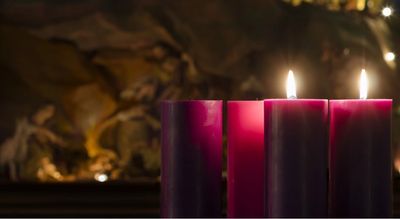
First Sunday of Advent
1st Sunday in Advent - Year A 2025
Friends, today we begin a new liturgical year. Advent always begins with a call that is gentle on the surface, yet deeply urgent. The Scriptures ask us to wake up and to prepare our hearts, not simply for Christmas, but for the coming of the Lord at the end of time. Advent reminds us that we live between two comings. Christ has already entered our world through the Incarnation, and Christ will come again in glory. The question placed before us today is simple and direct. Are we ready to receive him?
Isaiah begins with a vision of the future that God desires for all his people. He speaks of a holy mountain where nations stream together in peace. There is no violence there, no fear, no division. People lay down weapons. They walk in God’s ways. Isaiah invites us to imagine a world fully under the reign of God. A world where every heart is ordered toward justice and peace. A world in which we all desire the same good, which is God himself.
This vision is not meant to feel distant or unreal. Isaiah is speaking into the present moment. He is telling us that the future God desires should shape the way we live now. The holy mountain is not only the end of history; it is the place where God is drawing us today. When we come to the Eucharist, we rise with one another toward that mountain. When we forgive. When we choose charity over resentment. When we turn from sin. Every act of love is a step toward the peace of God.
Then Jesus takes Isaiah’s message and adds a new layer. He speaks of the coming of the Son of Man. He tells us that this coming will be unexpected. Some will be ready. Some will not. The difference between them is not fear, but watchfulness. Some are awake to God’s presence. Others are asleep. Jesus is not trying to frighten us. He is trying to awaken our hearts. He is saying, Live today in such a way that if the Lord stood before you right now, you would run to him with joy.
That is why the image of the thief in the night is so powerful. If we knew when a thief was coming, we would stay awake. But life does not work that way, and grace does not work that way. Christ comes to us in the hidden moments: in the neighbor we ignore, in the hurt we cling to, in the invitation to pray that we push aside. Advent asks us to pay attention. To guard the heart. To notice how God draws near.
Saint Paul continues this message. He speaks with urgency. He says that the night is nearly over and the day is at hand. In other words, God is offering us a new beginning. But this beginning requires something from us. Paul says that we must throw off the works of darkness and put on the armor of light. We must clothe ourselves in the Lord Jesus Christ.
This is where Advent becomes very personal. What needs to be thrown off? What weighs down the heart? What desires or distractions keep us from running to Christ? These may not be dramatic sins. Often they are ordinary habits that quietly take hold of us. The constant need to be busy. The fear of silence. The little resentments we feed. The comforts we reach for instead of turning to God. Advent is a grace-filled time to let the Lord wash over those places and cleanse them. To let the peace of Christ settle the heart.
The Collect today gives us a beautiful image. We asked God to give us the resolve to run forth to meet Christ with righteous deeds. Not to walk slowly. Not to wait passively. To run. That image is important. People run toward something they love. They run because their heart is drawn forward. Advent invites us to love Christ more deeply so that the heart naturally moves toward him. And the Collect tells us where we are running. We are running to be gathered at his right hand, to receive the heavenly kingdom he has prepared for us.
This is not something we accomplish by our own strength. It is the work of grace. It begins by allowing the Lord to reorder our desires. To take the restless parts of us and place them in the light. To loosen our attachment to the passing things of this world. The Prayer after Communion will remind us that we walk amid passing things. Advent gives us the clarity to see which things endure and which things do not, and to choose the things of heaven.
So how do we begin? First, by asking the Lord to awaken us. To open our eyes to his presence in our ordinary lives. To show us the places where our hearts are asleep. Second, by making room for prayer. Even a few minutes of quiet each day can reorient the soul. In that silence, the Lord clears away the clutter and makes space for his peace. And third, by choosing one simple way to love more intentionally. A phone call of reconciliation. A word of encouragement. An act of generosity. These small choices prepare the heart to meet Christ with joy.
Friends, Advent is not merely a countdown to Christmas. It is the beginning of a journey up the holy mountain. It is the season when the Church calls us to stand awake, to lift our heads, and to prepare to receive the Lord who comes in glory. He comes with peace. He comes with mercy. He comes to gather us to himself.
May we desire him more and more. May we shed the darkness that keeps us from him. And may we run forth to meet Christ with hearts that are ready, cleansed, and filled with his peace. Amen.
